Despite having the lowest gold income, supports can always carry games with huge engages, smart peeling, and effective vision control. Here are 5 tips for anybody starting off in the role.
Enchanters vs Engage
The two main categories of supports are enchanters and engagers. Enchanters focus on buffing allies and keeping them safe from danger, with champions like Janna, Lulu and Soraka. Engagers are looking to start fights and keep the enemy locked down with CC; examples include Alistar, Thresh and Rell.
Being able to play champions from both classes is essential for supports, as you can round out a team comp depending on what your team is missing. Practice on both classes is essential considering how different the playstyles are; engagers play offensively on the front line, while enchanters play defensively on the back line.
Aggression In Lane
Even if you are playing a defensive enchanter, it's still your responsibility to make plays during the laning phase. This isn't just referring to all-ins where you're trying to kill the enemy bot lane, but also initiating trades to chip away at the enemy's health bar to establish control over the lane.
You need to be aware of your ADC's positioning, ensuring they're in range of the enemy to follow up once you've started a trade. A trade can go awry if they're too far away and you still engage, as you'll be in a 1v2 and will take more damage than you deal.
Roaming
You are the entire team's support, not just your ADC's. Roaming can help your other lanes get ahead or come back after falling behind. One of the most effective times to roam is when you're coming back from a recall, as you'll have been in the fog of war for a while so can catch enemies off guard.
If you do roam, it's essential you communicate with your ADC. This encourages them to play defensively under tower while you're roaming, making it more difficult for the enemy to kill them in a 2v1.
Vision Control
Controlling vision is one of the most important jobs when playing support; it provides invaulable information, and this information translates to power. One of the first things you should do when moving out of base is placing down your wards and clearing enemy vision, as this illuminates where it's safe to make plays.
It's imperative you place vision around an objective like Baron and Dragon about a minute before it spawns. This allows your team to safely move to the area and start contesting the objective, and can spot out the enemy so you can start a fight on your terms.
Be Selfless
Playing support demands that you be a selfless player, else you won't find success in the role. You are your team's backbone, protecting them and setting them up to shine. Sometimes that means you'll have to be sacrificial lamb, diving into the enemy team to start a fight or blocking skill shots for your allies. You may die in the process, but this selflessness can win you the game.
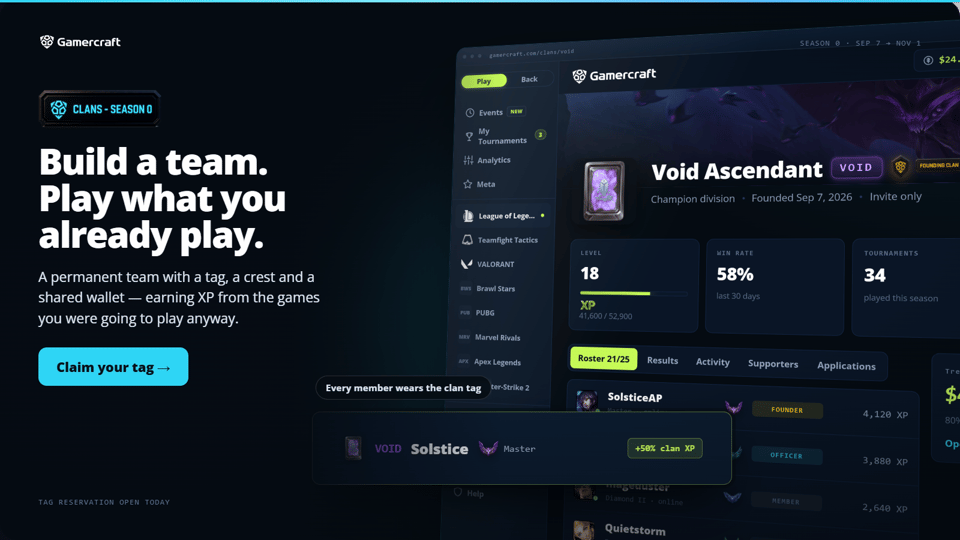
On vous l'avait promis, on a pris notre temps, et aujourd'hui ça y est : les clans sont là. L'idée tient en une phrase : les jeux auxquels vous jouez déjà devraient finir par compter pour quelque chose — et compter avec les gens avec qui vous les jouez déjà. C'est quoi, un clan ? Un clan, c'est une
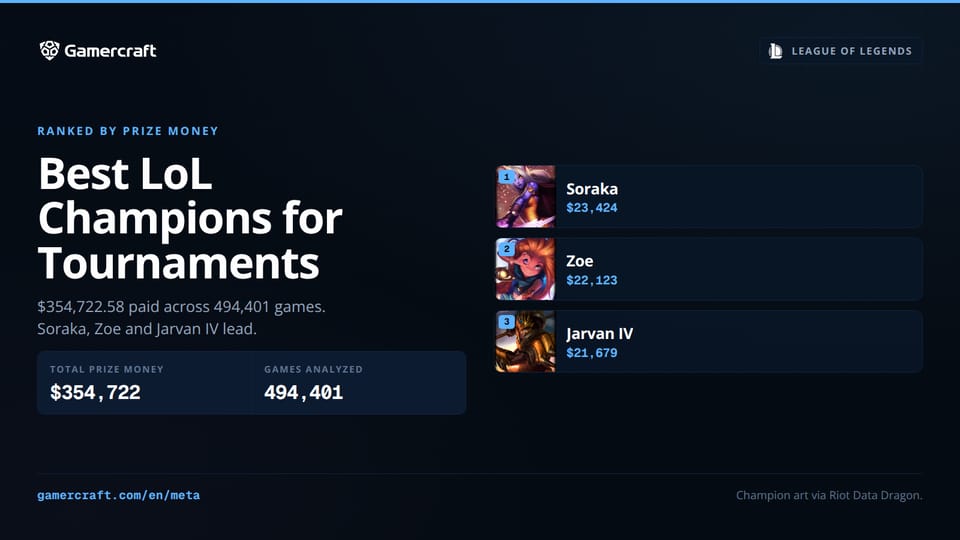
Les tier lists de solo queue classent au win rate. Nous, on a classé les 173 champions à l'argent qu'ils ont vraiment rapporté : 380 308,98 $ sur 523 950 parties de League en 12 mois. Le podium ? Soraka, Zoe et Jarvan IV. Pas un seul ADC à l'horizon.
Le minimum de 6 $, les 5 % de frais de traitement, et pourquoi les crédits ne sont pas de l'argent. Les conditions que la plupart des plateformes enterrent au fond de leur FAQ, publiées ici en entier.







 Thomas Ruiz1 septembre9 min